March is Women’s Her-Story Month

Malala Yousafzai, Pakistani Activist, University of Oxford 2020 Graduate, and Youngest Nobel Prize Laureate 

https://malala.org/malalas-story

https://malala.org/our-work?sc=header

Malala Yousafzai’s lived experience of being targeted and shot in the face and surviving is a story of great courage. Her continued advocacy for safe and free education for girls around the world earned her a Nobel Prize. The Malala Fund has raised $22 million to fund girls’ education who otherwise would be prevented from going to school in Pakistan, Afghanistan, Brazil, Turkey, Ethiopia, Lebanon, and Nigeria. Education for Girls

Celebrating Women’s Firsts

Hidden Figures movie based on a true story about three African American women mathematicians who significantly helped NASA to win the Space Race.

“In 1961, a time of segregation and rampant racism and sexism, three African-American women overcame every challenge they faced and helped NASA in the early days of the Space Race. The record of Katherine Johnson, Dorothy Vaughn and Mary Jackson is a story that was ignored until now.”

Hidden Figures Book Read for Children, read by the book’s illustrator, Laura Freeman.

Mary Jackson, NASA scientist (1961)

https://online.maryville.edu/blog/women-of-color-in-stem offers a list of amazing scientists for us to honor their contributions in STEM fields.

Bessie Coleman, First African American and Native American Pilot in the world
(1892-1926) 
https://www.womenshistory.org/education-resources/biographies/bessie-coleman 
“Bessie Coleman soared across the sky as the first African American, and the first Native American woman pilot. Known for performing flying tricks, Coleman’s nicknames were; “Brave Bessie,” “Queen Bess,” and “The Only Race Aviatrix in the World.” Her goal was to encourage women and African Americans to reach their dreams. Unfortunately, her career ended with a tragic plane crash, but her life continues to inspire people around the world.”

Mae Jemison is the First African American Woman Astronaut (1956- Present)
  •  https://www.womenshistory.org/education-resources/biographies/mae-jemison 
  • “As a doctor, engineer, and NASA astronaut, Mae Jemison has always reached for the stars. In 1992, Jemison became the first African American woman to travel in space. She has also written several books and appeared on many television programs including an episode of Star Trek: The Next Generation. In addition to her many awards, Jemison has been inducted into the National Women’s Hall of Fame and the International Space Hall of Fame.”

Queen Liliuokalani, First and Last Queen to Rule Sovereign Hawaii (1838-1917)
  •  https://www.womenshistory.org/education-resources/biographies/queen-liliuokalani 
  • “Growing up in a royal family, Queen Lili‘uokalani was trained to be a monarch. Even though becoming queen was probably not a surprise to her, she may not have known that she would also become the last sovereign monarch of the Kingdom of Hawaii. Unfortunately, she was only able to reign for three years because the United States overthrew the Hawaiian monarchy. However, Lili‘uokalani published her side of the story in a memoir that became the only autobiography written by a Hawaiian monarch.”

Pacific IslandersPasifika, or Pasefika, are the peoples of the Pacific Islands. It is a geographic and ethnic/racial term to describe the inhabitants and diaspora of any of the three major sub-regions of Oceania (MicronesiaMelanesia, and Polynesia). It is also sometimes used to describe inhabitants of the Pacific islands (i.e. citizens of Pacific states who are of Asian and European descent who call the Pacific their home).

New Zealand has the largest concentration of Polynesian Pacific Islanders in the world—during the 20th century and into the 21st century the country saw a steady stream of immigration from Polynesian countries such as SamoaTonga, the Cook IslandsNiue, and French Polynesia.

https://en.wikipedia.org/wiki/Pacific_Islander


NSC Welcomes the New Pacific Islander Affinity Group

North Seattle College is excited to announce it’s first-ever Pacific Islander Affinity Group!


Anna Bungag, PIA’s logo artist and North Seattle College Graduate

TRiO Navigator Jeff Bermudes (he/his), Pacific Islander Affinity Group Advisor is a descendant of the Chamorro people indigenous to the Mariana Islands. Sabrina Malialani (she/her), Student Leader is a descendant of King Kamehameha V indigenous from the Hawaiian Islands. In celebration and identification of the Pacific Islander Affinity Group, we would like to introduce our brand-new logo designed by North Seattle College Alumnus, Ana Bungag. 

Pacific Islander Affinity Logo Artist- Ana Bungag (She/Her, Fillipino- American):

I am Ana Bungag and my pronouns are she/her. I immigrated from the Philippines to the US when I was a teenager, but I just recently became a US citizen and so I now identify as Filipino-American. I graduated at North Seattle College with a bachelor’s degree in International Business and now I am studying Graphic Design at Seattle Central College.

How was your experience going to NSC? 

For me, the classes that I took at NSC shaped me in the career path that I wanted to take. My Digital Arts class sparked my interest in becoming a graphic designer and digital artist. My classes in International Business helped me understand even more about the cultures and practices of people from different countries which I feel I should keep in mind when I am working or interacting with someone. 

Right now, my art and designs are focused on my community, especially Asian/Pacific Americans. I want to help and show my support for them especially now with all the hardships they have to face since the beginning of the pandemic.

It Happened Here: How Internment of Japanese-Americans Shaped the History of North Seattle College

undefined
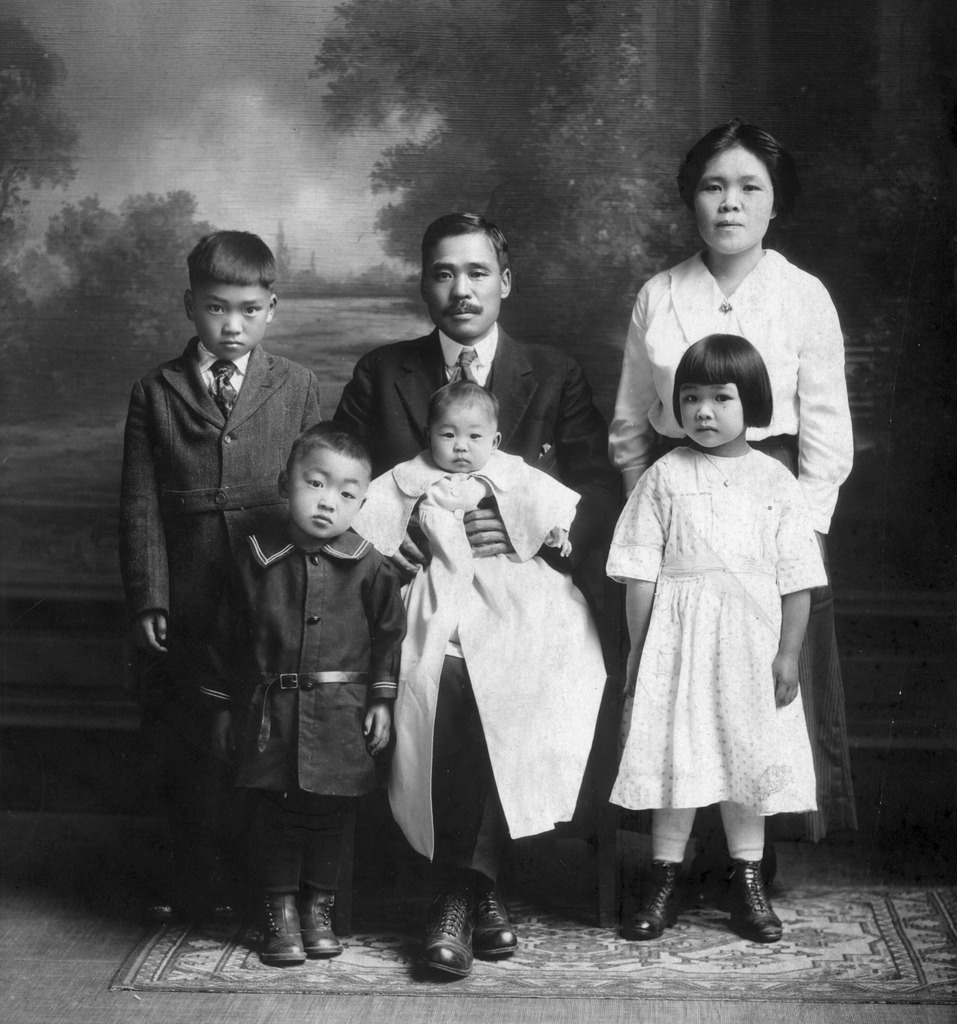
From (L to R): Akira, Haruo, Mr. Kumasaka, Mariko, Mrs. Kumasaka, May (via Densho)

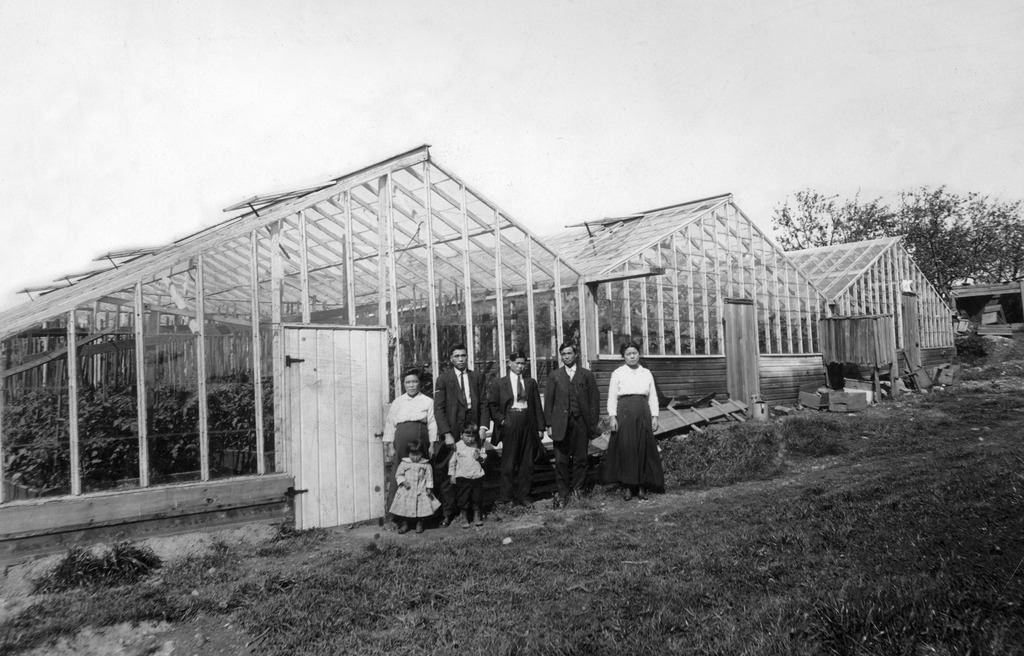
In 1911, Japanese immigrants Shoji and Matsuma Kumasaka founded Green Lake Gardens on the spot where the College stands today. The whole area around Green Lake was farmed by Japanese immigrants and their families. By the 1920s, Japanese-American farmers supplied 75% of King County’s vegetables and half its milk supply, and more than half of Pike Place Market’s farmers were Japanese. The Kumasaka family used greenhouses to grow flowers and vegetables, and they built a small Japanese Language School and Community Center that stood on the southeast corner of the property, so second and third generation folks could bring their kids to learn the culture. This entire area was a thriving hub of Japanese-American community, up until World War II. 

undefined
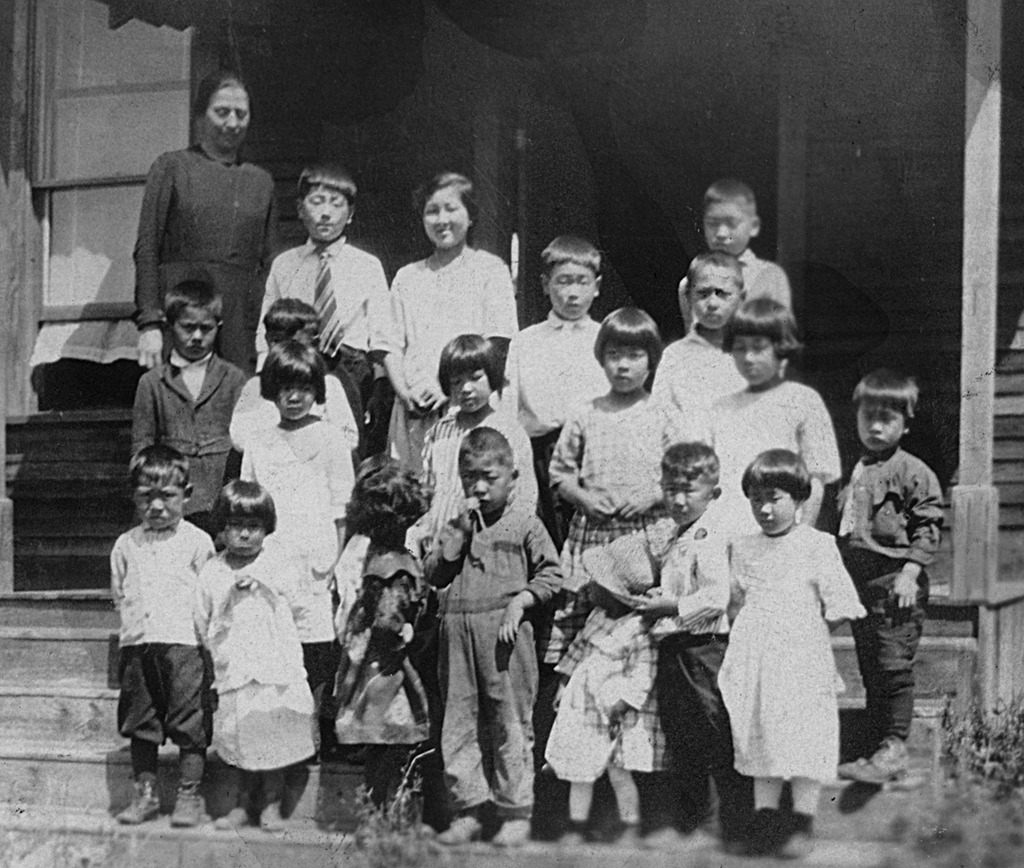
This Sunday school was started by three missionaries from the Seattle Japanese Baptist Church in the early 1920s. Back row (L to R): Miss Rumsey, Naoshi Kumagai, Kay Suzuki, Tadashi Kumagai, unidentified, Akira Kumasaka. Middle row (L to R): Tak Nakawatase, unidentified, unidentified, May Kumasaka, Kimi Taguchi, Ko Suzuki, unidentified. Front row (L to R): Sam Taguchi, Toshiko Suzuki, unidentified, Haruo Kumasaka, Kazuko Sasaki, Nobi Sasaki, Takako Kumagai. (via Densho)
undefined
By the late 1930s, many Issei-operated floral greenhouses existed in the North Seattle area. The flowers were sold at Seattle’s Public Market, retail stores, and wholesale companies. (via Densho)

 On February 19, 1942, President Franklin D. Roosevelt signed Executive Order 9066, leading to the forced removal & incarceration of more than 120,000 Americans of Japanese ancestry on the West Coast. They were taken from their homes and sent to internment camps for the “crime” of looking like the enemy. The vibrant Japanese-American community that had lived and farmed here for decades was  gone in a matter of days. This happened here, less than 80 years ago, on the land where our college is now built. 

Akira Kumasaka (the son of the original owners) and his wife Sayo and their children were interned at camps in Puyallup and Minidoka, Idaho. After the war, the Kumasakas came home to find their greenhouses seriously damaged, and the community school burned to the ground. The Kumasakas were one of the few families who chose to stay and try to rebuild their farms. The neighborhood was changing as the city of Seattle expanded, with Northgate Mall being built in 1950. 

In 1952, Akira was driving the family’s garden truck and suffered a stroke. Police assumed he was driving drunk and threw him in jail, and he died days later. Sayo was pregnant at the time. She had never driven a truck or written a check. But she learned fast because she had to. She managed to take over running the farm while providing for her kids.  

undefined
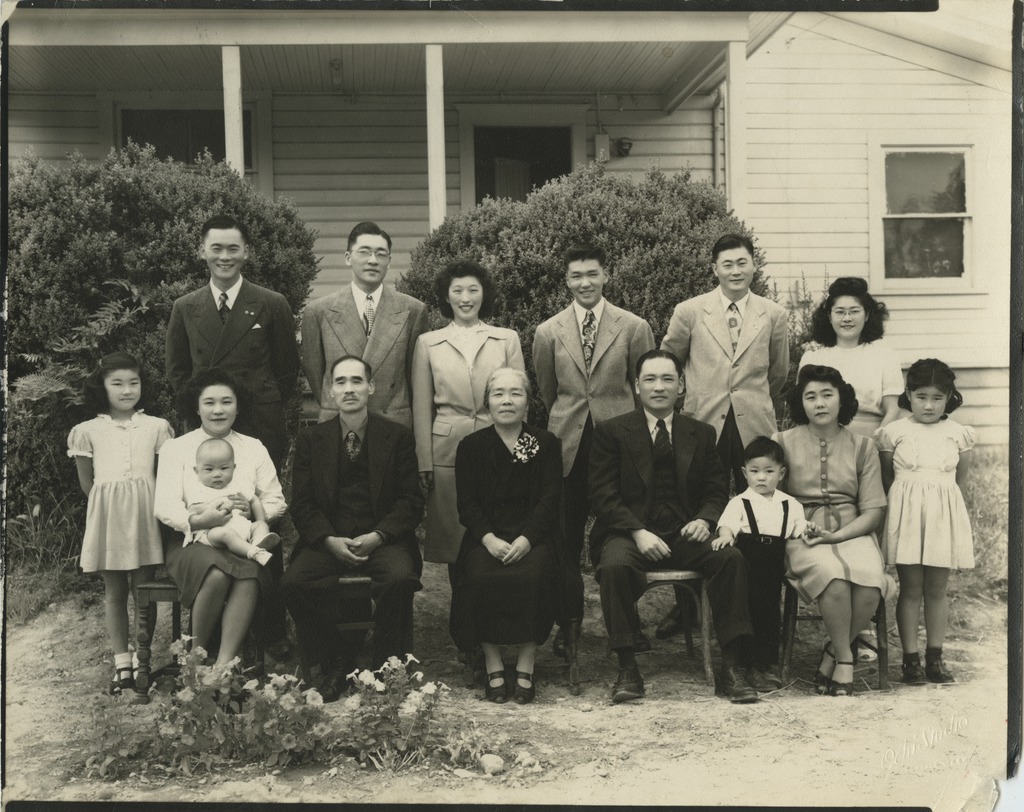
Kumasaka family, date unknown.

In 1968, when the State went to buy the land where North would be built, they offered people pennies on the dollar to buy their property. Sayo Kumasaka was still alive then. She died in 2007 at age 90—again, this wasn’t long ago. She got all the residents organized to negotiate, and in the end, the State was forced to offer them all a fair price. All the homes that were there got bulldozed and plowed over, and the College opened in 1970. Today you can still see what’s left of those homes, out by the north parking lot. They look like weird mounds under the grass that don’t look like the rest of the land. Now it’s just the ghost of what used to be there, and it’s possible to pass by them hundreds or thousands or times and never know.    

Today, we stand in solidarity with all humans who are being detained because of race, religion & national origin. We learn the history, hoping we can stop it from happening again. 

Sources: 
We have done our best to tell this story accurately and respectfully with the information that is available to us, using a combination of oral histories and conversations on campus, and the following sources. If you have more information or would like to offer a correction, please email us at StudentLeadershipNorth@seattlecolleges.edu  

https://densho.org/ 
http://ddr.densho.org/ddr-densho-134/ 
https://www.historylink.org/File/298 
https://historylink.org/File/3447 
https://www.seattlepi.com/local/article/Sayo-Kumasaka-Harmeling-1916-2007-Gardens-1228100.php 

Additional stories and education about Japanese Internment can be found on this YouTube Channel curated by Densho:
https://www.youtube.com/channel/UChP_ZwM13TCNSqNJl5SDlsA

And this resource list curated by North Seattle Library:
https://libguides.northseattle.edu/dayofremembrance

Lunar New Year 2021: Year of the Ox

Lunar New Year is a celebration based on the Lunar calendar system that originated from China. This year, the first day of the Lunar New Year falls on February 12th of the Gregorian calendar (the regular version we use everyday which is based on the sun). 

Much like the International/Gregorian New Year, Lunar New Year is the time for family reunions and a series of never-ending feasts with friends and family (not during this pandemic of course!). However, there is a twist– we get red envelopes filled with $$$! 

There are similar ideas between the Western and Eastern world which revolves around the zodiac. While the Western Zodiac signs (such as Capricorn, Aquarius or Leo) change roughly every 30 days, the Chinese zodiac is a cycle of 12 animals that changes every year: Rat, Ox, Tiger, Rabbit, Dragon, Snake, Horse, Sheep, Monkey, Rooster, Dog, and Pig.

To find out about the original story of Lunar New Year, watch this video:

To find out what your animal is, try this website here.

To find out what your animal says about you, click here.

Lunar New Year is a holiday celebrated by many Asian cultures. Below is the list of countries that celebrate Lunar New Year:

  • China
  • Hong Kong
  • Indonesia
  • Japan
  • Mongolia
  • Singapore
  • South Korea
  • Taiwan
  • Thailand
  • Vietnam

And many more!

Different countries have different celebratory practices, but the main theme of this holiday is to gather with family members, and reach out to those in your life that you haven’t touched base with in a while, to wish them good luck!

On behalf of the North Seattle Student Leadership and Multicultural Programs, we wish you a prosperous new year of the Ox!

Are Prisons Obsolete?

Angela Davis asks, “Are prisons obsolete?” The framework around abolitionism is rooted in an imagination of a better world for all – without police, without violence, without prisons. Abolitionism envisions equitable change across classes and races and investing in our community instead of individualist greed.Imagine, for a moment. What would that world look like?

https://www.youtube.com/watch?v=2m8YACFJlMg&ab_channel=TheIntercept

North Seattle College Presents: Nikkita Oliver

The North Seattle Multicultural Events Board in partnership with North Seattle College BSU (Black Student Union) is proud to present a Conversation with Nikkita Oliver covering topics of abolitionism and how we can make positive changes in supporting marginalized communities.

Angela Davis asks, “Are prisons obsolete?” The framework around abolitionism is rooted in an imagination of a better world for all – without police, without violence, without prisons. Abolitionism envisions equitable change across classes and races and investing in our community instead of individualist greed.Imagine, for a moment. What would that world look like?

Event: North Seattle College Hosts Nikita Oliver on “Political Participation at the State- & Local-Level” 

Time: Thursday, February 4, 12:00 -1:15 PM   

Join Zoom Meeting https://zoom.us/j/96507588165?pwd=Y3RiMkdSdEJJSWZmMm82VUNzVktjUT09 

Meeting ID: 965 0758 8165 

Passcode: engage 

300-person maximum, first come first served  

(Biography from Nikkita’s homepage: https://www.nikkitaoliver.com/)
Nikkita Oliver (they/them) is a Seattle-based creative, community organizer, abolitionist, educator, and attorney. Working at the intersections of arts, law, education, and community organizing Nikkita strives to create experiences which draw us closer to our humanity and invites us to imagine what we hope to see in the future.

Nikkita has opened for Cornel West and Chuck D of Public Enemy, featured on the Breakfast Club, KUOW’s The Week in Review, Cut Stories, and performed on The Late Night Show with Stephen Colbert. Nikkita’s writing has been published in the South Seattle EmeraldCrosscut,the EstablishmentLast Real IndiansThe Seattle Weekly, and The Stranger. Nikkita organizes with No New Youth JailDecriminalize SeattleCovid-19 Mutual Aid – Seattle, and the Seattle Peoples Party. Nikkita speaks and performs for events, at universities and conferences, and facilitates trainings on equity, law and justice, education, and arts activism all over the United States.

Nikkita is the co-executive director of Creative Justice, an arts-based alternative to incarceration and a healing engaged youth-led community-based program. Nikkita was the first political candidate of the Seattle Peoples Party running for Mayor of Seattle in 2017 narrowly missing the general election by approximately 1,100 votes; coming in third of 21 candidates.

There is no denying that we are living in extraordinary political times. Many citizens are hungry to share their voices and help facilitate productive political change, but they do not necessarily know how to do so. Nikkita Oliver (they/them) is a Seattle-based creative, community organizer, abolitionist, educator, and attorney. Working at the intersections of arts, law, education, and community organizing Nikkita strives to create experiences which draw us closer to our humanity and invites us to imagine what we hope to see in the future.

The Seattle College’s Chancellor Shouan Pan and North Seattle College’s Interim President, Dr. Chemene Crawford, will welcome participants. Then, Nikkita Oliver will speak for approximately 45 minutes, followed by Q&A facilitated by the North Seattle College Ad Hoc Civic Engagement Committee. 

This event is open to faculty, staff, students, all Seattle Colleges and our Seattle neighbors. ASL interpreters will be provided. A recording will be available after the event.

Please contact Jill Lane, Political Science Faculty, @ jill.lane@seattlecolleges.eduCristobal Borges, History Faculty, @ cristobal.borges@seattlecolleges.edu or Deepa Bhandaru, Social Justice/Intersectional Studies, @ deepa.bhandaru@seattlecolleges.edu.

This event is sponsored by: 

  • The Seattle Colleges’ Offices of Equity, Diversity & Inclusion 
  • The North Seattle Office of the Vice President of Instruction, Faculty Development 
  • The North Seattle College ad hoc Civic Engagement Committee  
  • North Seattle College Student Leadership 
  • The Seattle Colleges’ Political Science Programs 
  • The North Seattle College History Program 
  • The North Seattle College Social Justice/Intersectional Studies Program 

https://www.nikkitaoliver.com/abolition-15-week-course

The Root of Racial Injustice…Megan Ming Francis

In this inspiring and powerful talk, Megan Francis traces the root causes of our current racial climate to their core causes, debunking common misconceptions and calling out “fix-all” cures to a complex social problem Megan Ming Francis is an Assistant Professor in the Department of Political Science at the University of Washington where she specializes in the study of American politics, race, and the development of constitutional law. She is particularly interested in the construction of rights and citizenship, black political activism, and the post-civil war South. Born and raised in Seattle, WA, she was educated at Garfield High School, Rice University in Houston, and Princeton University where she received her M.A. and her Ph.D. in Politics. In her award winning book, Civil Rights and the Making of the Modern American State, shows that the battle against lynching and mob violence in the first quarter of the 20th century were pivotal to the development of civil rights and the growth of federal court power. She is inspired by people who fight for justice–even when the end appears nowhere in sight.

Restorative Justice…Deanna Van Buren

Deanna Van Buren designs restorative justice centers that, instead of taking the punitive approach used by a system focused on mass incarceration, treat crime as a breach of relationships and justice as a process where all stakeholders come together to repair that breach. With help and ideas from incarcerated men and women, Van Buren is creating dynamic spaces that provide safe venues for dialogue and reconciliation; employment and job training; and social services to help keep people from entering the justice system in the first place. “Imagine a world without prisons,” Van Buren says. “And join me in creating all the things that we could build instead.”